Contractor SEO KPIs
If “SEO is working” isn’t showing up as calls, forms, and booked jobs, it’s not working the way a contractor business needs. The goal isn’t vanity metrics, it’s measurable lead flow from Google Maps, local search, and your website. This guide breaks down the contractor SEO KPIs that actually prove ROI, plus a simple routine to track progress weekly.
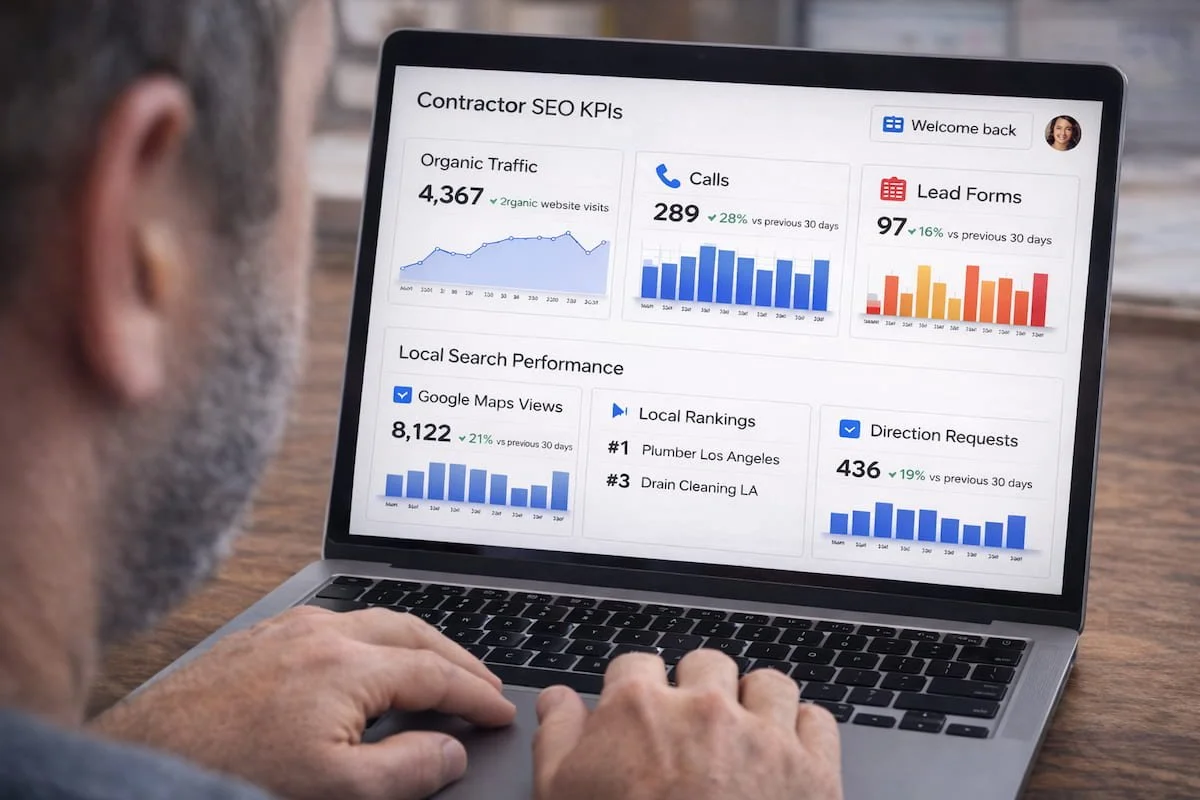
KPI #1: Qualified Leads (Calls + Form Submissions)
The most important SEO KPI for contractors is qualified leads phone calls and estimate requests from homeowners who need the service now. Track total calls, form submissions, and which pages drove them. This is the KPI that ties directly to revenue, staffing, scheduling, and job pipeline, not just “traffic.”
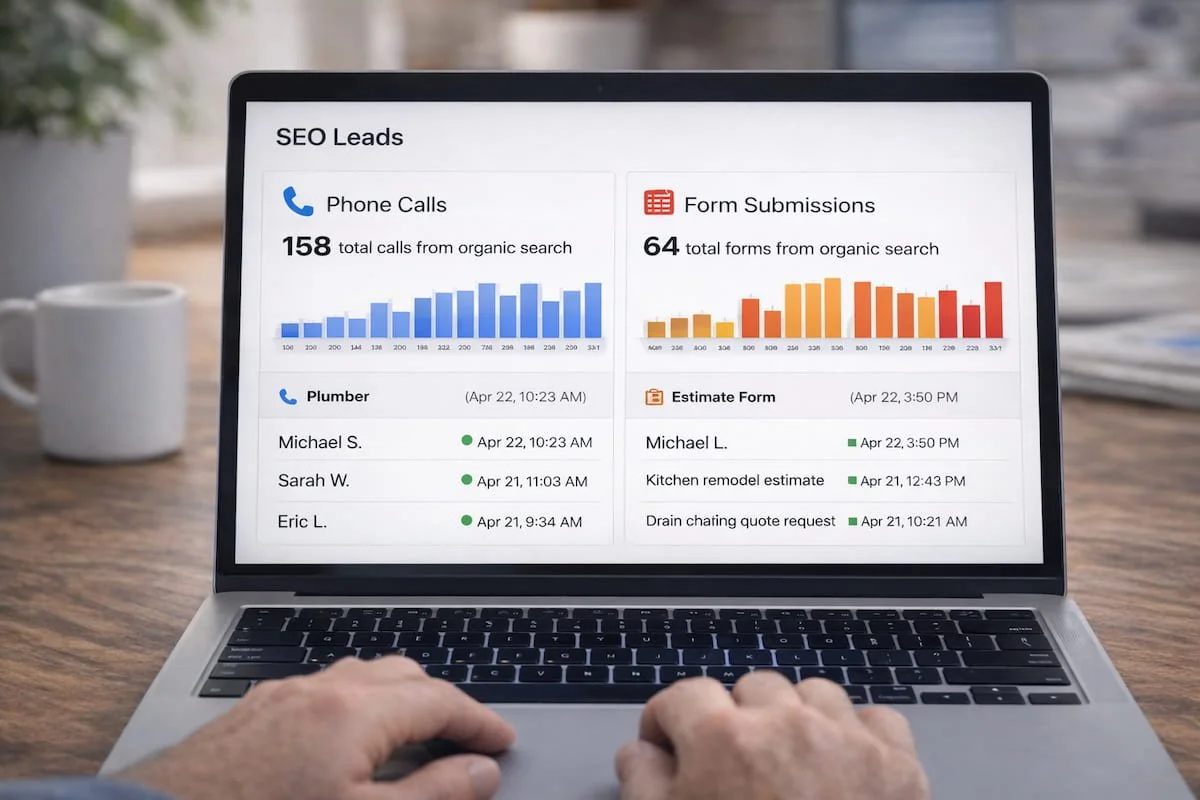
KPI #2: Google Maps Actions (Calls, Directions, Website Clicks)
For home services, Google Maps is often the main lead source. Track Maps actions: calls, direction requests, and website clicks from your Google Business Profile. These are direct buyer-intent signals. If Maps actions rise steadily, it usually means visibility and trust are improving in the local pack.
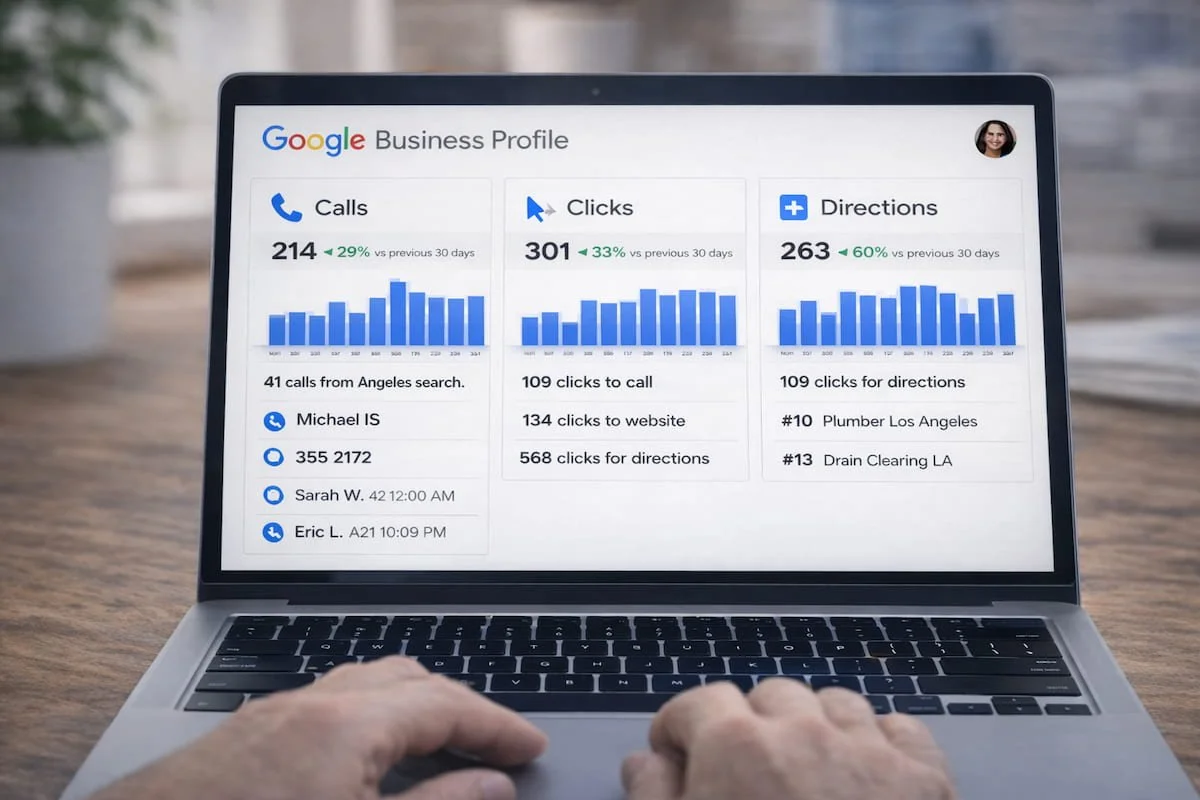
KPI #3: Local Pack Visibility (Top 3 Map Pack)
Contractors don’t need to rank #1 for every keyword contractors need to show up in the local pack for services that convert. Track whether the business appears in the top local results for priority searches like “roof repair near me” or “emergency plumber.” Local pack visibility is one of the clearest signals that SEO is becoming a consistent lead channel.
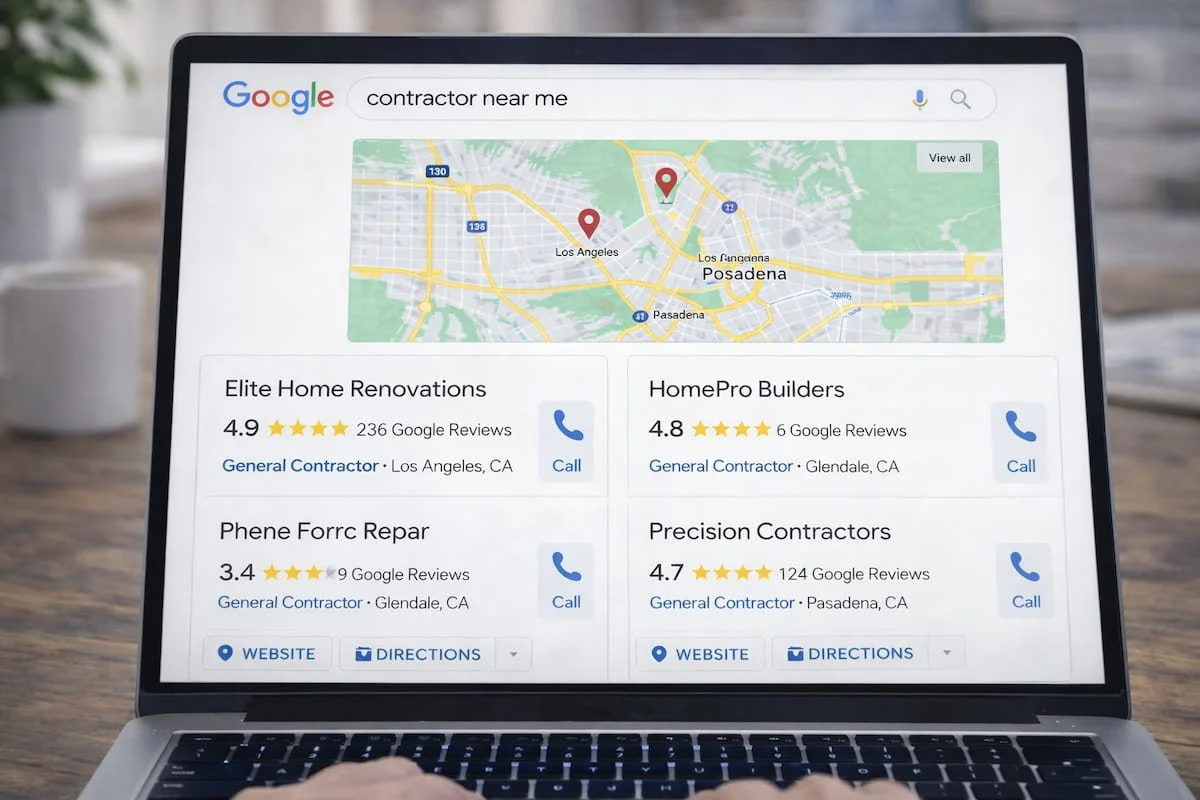
KPI #4: Ranking Movement for Money Keywords (Not Every Keyword)
Rankings matter but only the rankings tied to revenue. Track a short list of “money keywords” (5–15) that match real services and local intent. Examples: “water heater replacement [city]” or “AC repair [city].” If these terms improve over time, it usually aligns with more calls and stronger local visibility.
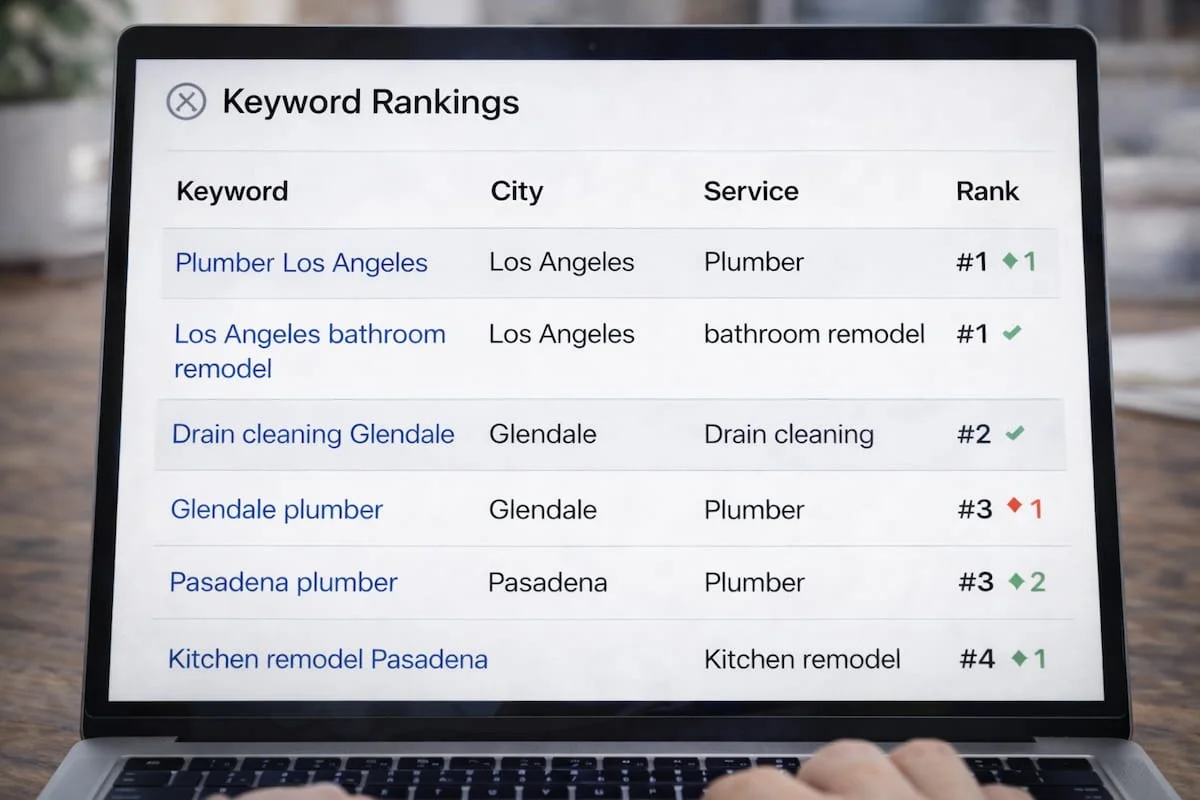
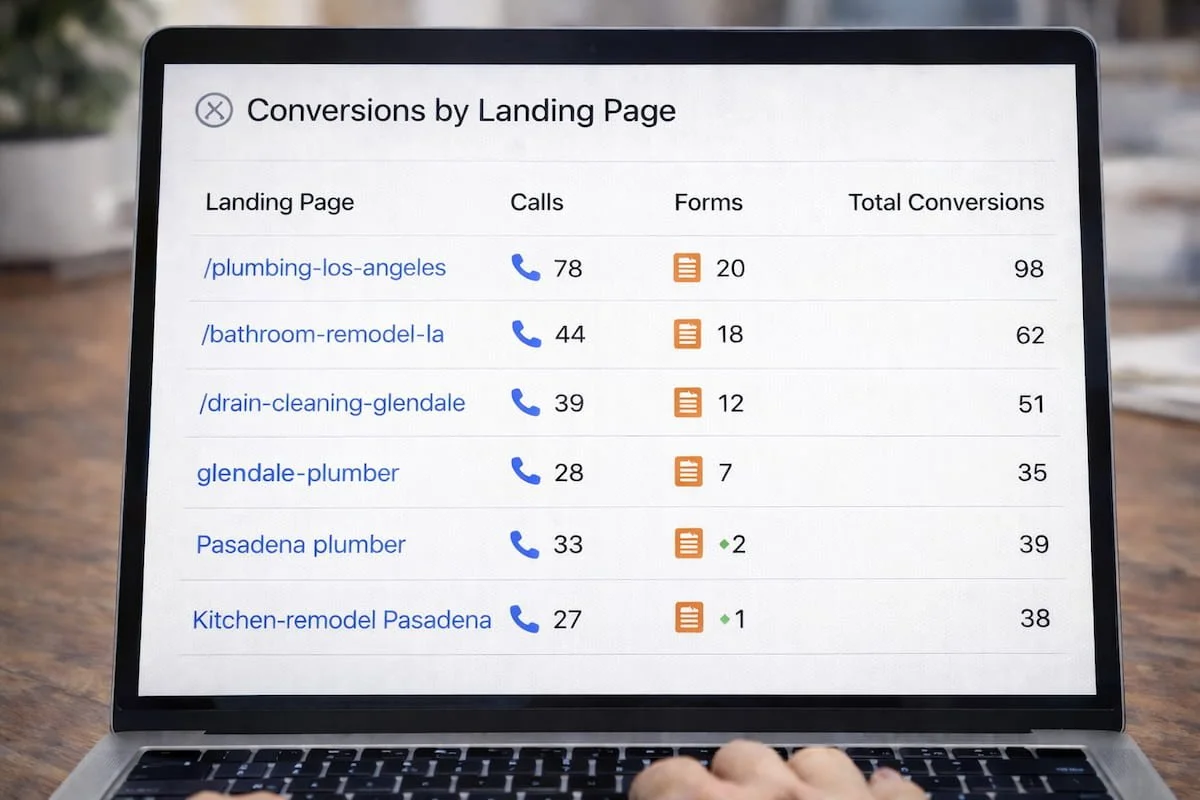
KPI #5: Conversions by Landing Page (Which Pages Make the Phone Ring)
Not all pages produce leads. Track conversions by page: which service pages, location pages, and blog posts drive calls and forms. This tells you what content is actually generating business. Then you can build more of what converts and improve or merge what doesn’t.
To strengthen the foundation that drives these conversions, use this guide: Local SEO for Contractors
The Simple Contractor Tracking Routine (Weekly + Monthly)
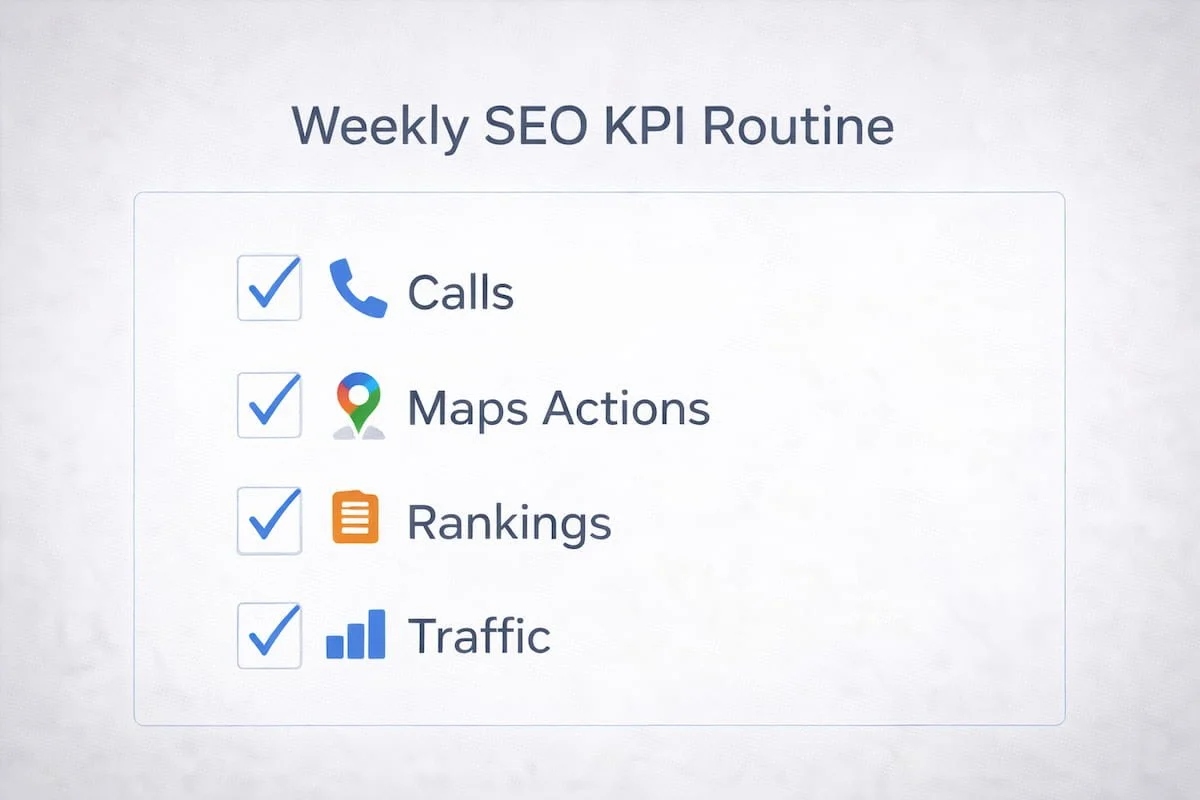
You don’t need a complicated dashboard to prove SEO ROI. Weekly, check lead counts and Maps actions. Monthly, compare your core KPIs to last month and note what changed (photos posted, reviews gained, content published). Consistent tracking makes improvements predictable and prevents “SEO guessing.”
Weekly (10 minutes):
Calls + form submissions (total + quality)
Maps actions (calls, directions, clicks)
Top 3 searches you showed up for
Monthly (20 minutes):
Local pack visibility for priority searches
Ranking movement for money keywords
Conversions by landing page
Want More Calls from SEO?
Want a contractor KPI setup that tracks calls, Maps leads, and SEO ROI without fluff? Get a quick consult with Dawla Marketing:
https://www.dawlamarketing.com
FAQs
-
The most important contractor SEO KPIs are qualified leads (calls and form submissions), Google Maps actions (calls, directions, clicks), local pack visibility for service keywords, and conversions by landing page. These KPIs tie directly to booked jobs and revenue.
-
Measure SEO success by tracking lead volume and quality, Google Maps actions, local pack visibility, and ranking movement for money keywords in the service area. If those improve month over month, SEO is producing real business outcomes.
-
Many contractors see early movement in 30–60 days after fixing profiles, improving pages, adding photos, and earning reviews. Stronger ROI typically builds in 60–120 days as local trust signals and conversions become consistent.