How to Rank in AI Search Results as a Home Service Contractor
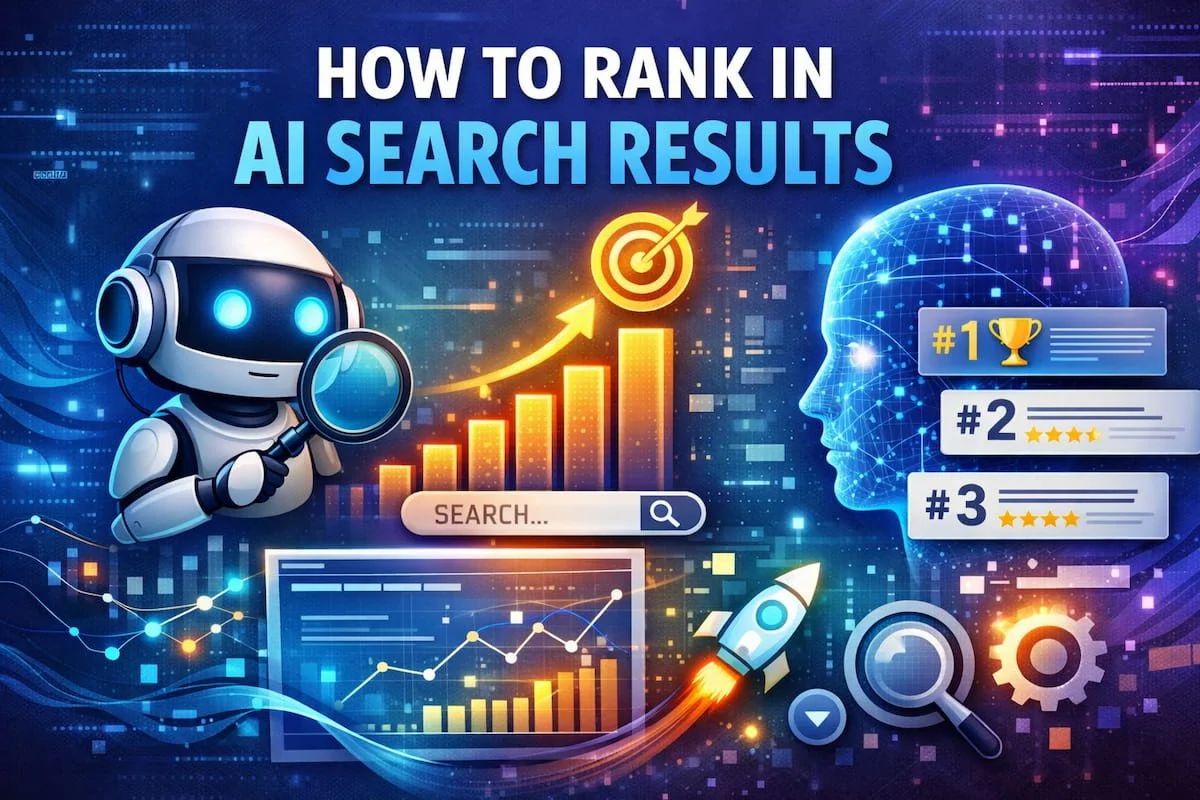
AI search is changing how homeowners discover contractors. Instead of scrolling through pages of links, they ask AI tools questions like:
“Who is the best roofer near me?”
“Which plumber can come out today in [city]?”
AI then summarizes a few options and if your business isn’t included, you don’t even get considered.
This guide explains how to rank in AI search results as a home service contractor by focusing on AI search visibility, AI optimization for websites, and simple changes you can make to your content and structure today.
What Does It Mean to Rank in AI Search Results?
When we talk about “ranking in AI search results,” we’re really talking about being:
Named in AI-generated answers
Cited as a source when AI summarizes information
Recommended when someone asks for the “best” or “top” contractor in your area
AI uses your website content, reviews, citations, and authority signals to decide which businesses to highlight. That means your online presence needs to be “AI-ready,” not just “SEO-friendly.”
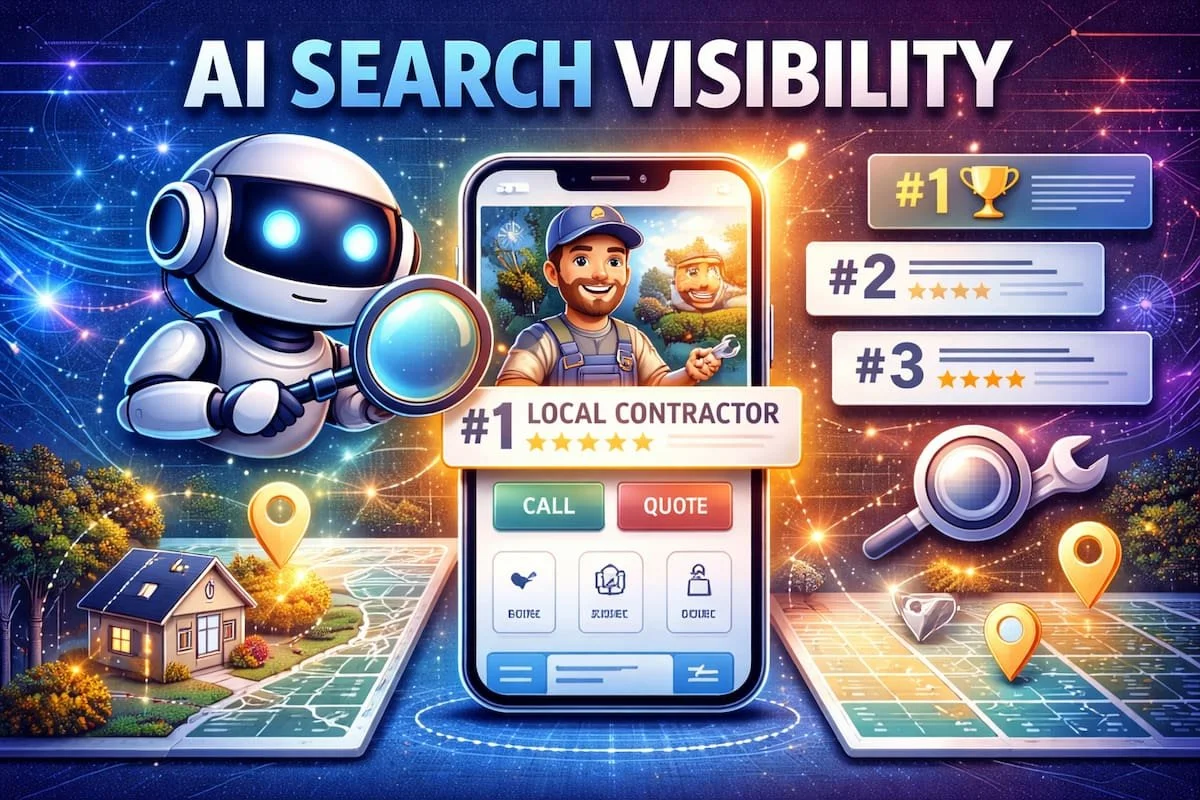
The Foundations of AI Search Visibility
Before you can win in AI search, you have to get the basics right. Think of this as the foundation layer of your AI visibility:
Clear Service Focus
Each page should focus on one main service or problem (roof leak repair, AC not cooling, clogged drain, etc.).
Don’t mix five services on one page and expect AI to understand what you’re best at.
Strong Local SEO Signals
Accurate Google Business Profile info, active reviews, real photos, and covered service areas.
Consistent Name, Address, Phone (NAP) across directories.
NLP-Friendly Content
Write like a homeowner talks:
“Why is my AC blowing warm air?”
“How much does it cost to replace a roof in [city]?”
Authority & Trust
Reviews, case studies, job photos, and real results.
Your website should feel like a local expert, not a generic brochure.

How to Optimize Your Website for AI Search Results
This is where AI optimization for websites becomes practical. To rank in AI search results, your pages should be built so AI can quickly:
Understand the topic
Find direct answers
See why your business is trustworthy
Here’s what to focus on:
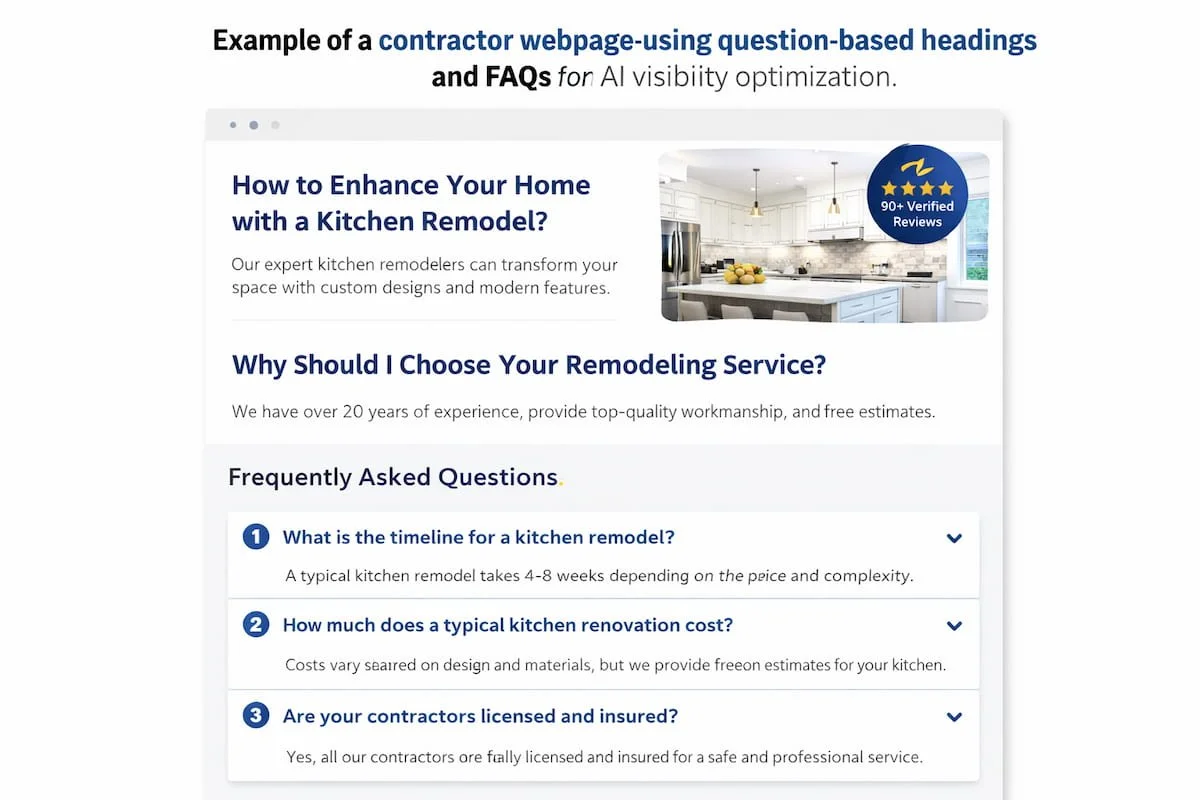
1. Use Question-Based Headings
Turn real homeowner questions into H2s and H3s, such as:
“How do I know if I need a new roof?”
“When should I call an emergency plumber?”
2. Add Short, Direct Answers Under Each Heading
Under each question, include a 40–80 word answer that clearly addresses the problem. That style is perfect for AI to quote and summarize.
3. Build Helpful FAQs
At the end of each blog or service page, include 3–6 FAQs answering the most common questions. Use natural, conversational language.
4. Add FAQ Schema
Use JSON-LD FAQ schema so search engines and AI systems can easily detect your questions and answers. This increases your chances of being used in AI responses.
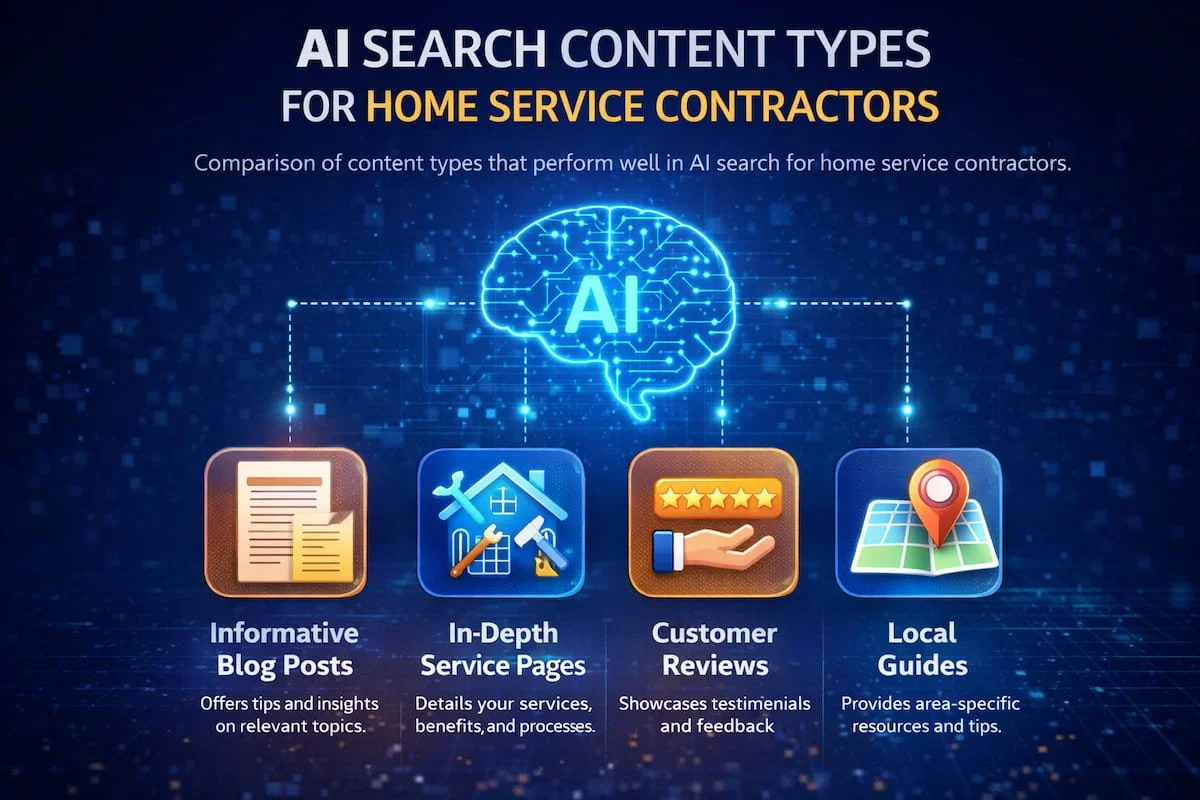
Content Types That Perform Best in AI Search
Not all content gets treated equally. Some types of content naturally perform better in AI-driven results, especially for home services:
How-to Explainers for Homeowners
“How to stop a roof leak temporarily before the roofer arrives”
“What to do if your furnace stops working in winter”
Problem–Cause–Solution Content
Explain symptoms, likely causes, and when to call a pro.
AI likes content that clearly breaks down steps and decisions.
Local, Scenario-Based Examples
Mention neighborhoods, seasonal issues, or regional weather.
Example: “In [city], heavy snow and ice can cause ice dams that lead to roof leaks.”
Short, Direct Comparisons
“Repair vs replace” style posts: roof, AC unit, water heater, etc.
When your content answers specific, real-life questions, AI systems see it as useful and are more likely to feature it.
Practical Steps to Start Ranking in AI Search Results
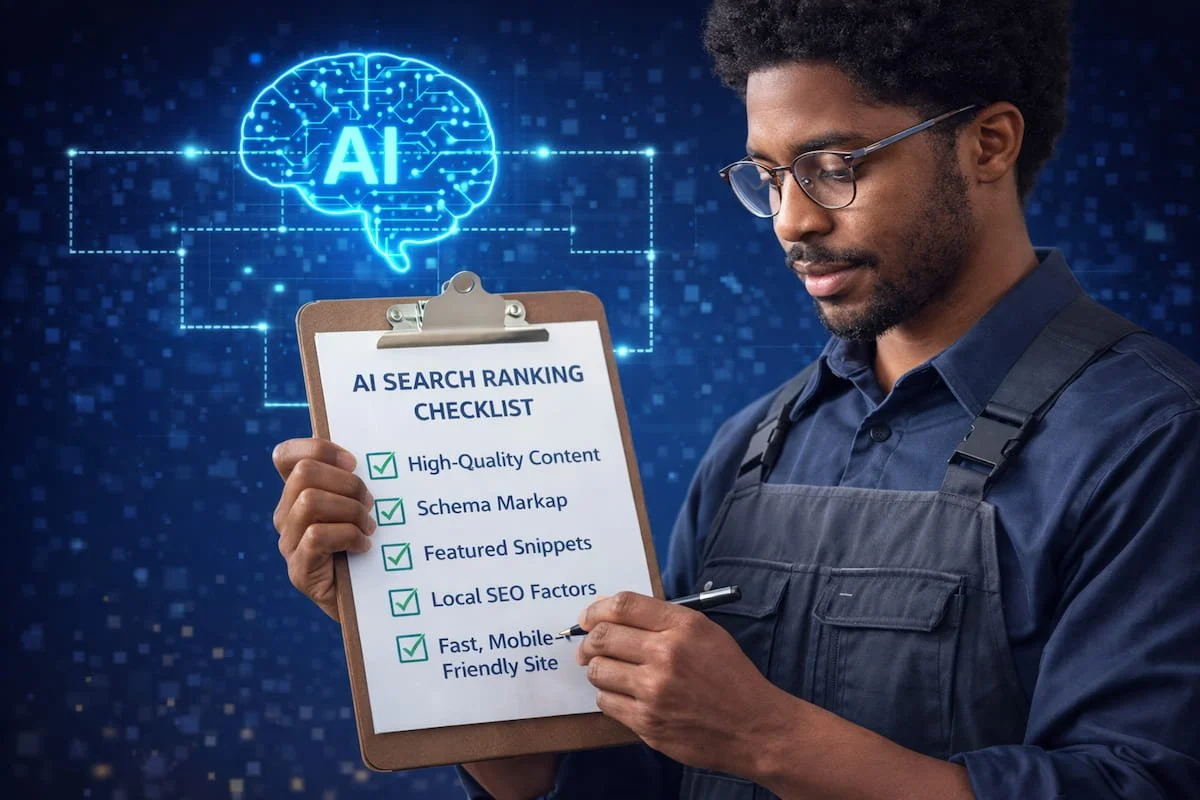
Here’s a simple action plan you can apply over the next 30–60 days:
Choose 3–5 Key Pages
Start with your highest-value services: roof replacement, emergency plumbing, AC repair, etc.
Rewrite for Clarity and Questions
Make sure each of those pages has:
One clear service focus
Short, direct answers near the top
Question-based subheadings
A short FAQ section at the bottom
Add Schema and Clean Up Technical Issues
Add FAQ schema and, if possible, LocalBusiness schema.
Check site speed, mobile usability, and broken links.
Update Project Photos and Reviews
Add recent project photos with descriptive alt text.
Gather fresh Google reviews that mention your service and city.
Test in AI Tools
Ask AI tools the kinds of questions homeowners ask about your services.
Note if and when your brand shows up, and improve pages that are being ignored.
Need Help Ranking in AI Search? Work with Dawla Marketing
AI search isn’t a future thing it’s already here, shaping which contractors get attention and which are invisible.
Dawla Marketing helps home service businesses:
Build AI-ready service pages and blogs
Structure content for AI search visibility
Implement FAQs and schema across key pages
Run audits that look at both SEO and AI optimization
If you want homeowners and AI tools to see you as the go-to contractor in your market, it starts with how your website is built and explained today.
Schedule a free AI + SEO consultation at:
https://www.dawlamarketing.com
-
Start by optimizing a few core service pages with clear topics, question-based headings, short direct answers, and FAQs with schema. Combine that with strong local signals like reviews, updated Google Business Profile info, and real project photos to help AI tools recognize you as a trusted local expert.
-
AI search uses many of the same signals as traditional SEO good content, authority, relevance, and user trust but places extra emphasis on clear answers, structured information, and real-world expertise. That’s why question-based content, FAQs, and strong local proof are so important for contractors.
-
Content that directly answers specific homeowner questions, explains problems and solutions clearly, and is supported by real expertise tends to perform best. “How-to,” “what to do if,” and problem solution style posts are especially attractive to AI systems looking for helpful, trustworthy information.