Local SEO Landing Pages for Contractors
Most contractor websites are built around one city. But most contractors work in five. That gap between where you work and where Google can find you is where jobs go to a competitor who built a page and you didn't. Local SEO landing pages close that gap. This guide covers what they are, how to build them correctly, and what it costs you when you skip them.
What Are Local SEO Landing Pages?
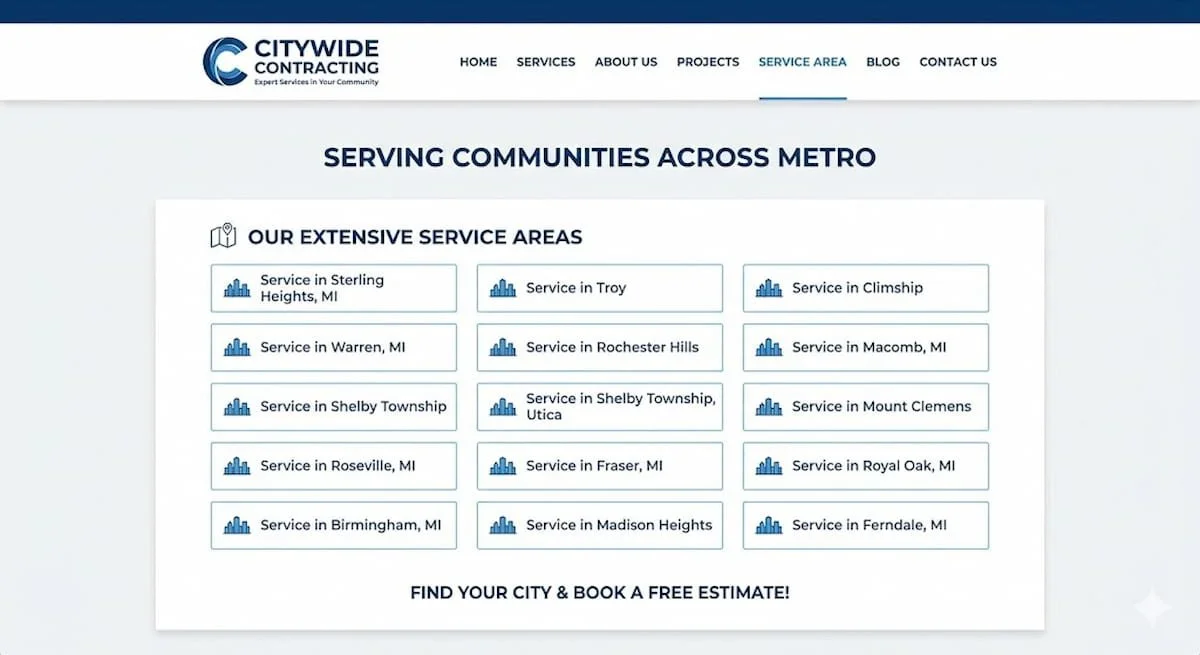
A local SEO landing page is a dedicated page on your website built to rank in one specific city. Not a paragraph at the bottom of your homepage listing ten towns. Not a single catch-all "Service Areas" page. A real, standalone page with its own URL, its own content, and its own focus on that city and the homeowners in it.
Google ranks pages—not websites. Your homepage cannot rank in Detroit, Ann Arbor, and Livonia at the same time. Each city needs its own page to compete in its own local search results.
What each page targets:
One city in the URL, H1, and copy
The specific services you offer in that location
Local proof—reviews, jobs completed, or references to that area
A direct call to action for homeowners in that city
Why Contractors Miss Leads Without Location Pages
A homeowner in a city you serve searches "roofer near me." You've done jobs there. But you don't have a page targeting that city so Google has nothing to rank. A competitor two towns over does. They get the call.
That's not about being better or cheaper. That's a visibility problem. And it happens in every city you work in without a dedicated page.
The mistakes that create this problem:
Listing 10 cities in one paragraph on a generic service area page
Copying the same content across every city page and swapping the name — Google flags this as duplicate content
Building city pages with no real local detail—no proof, no substance, just a city name and a phone number
Relying entirely on the homepage to cover multiple markets
Pro tip: Thin city pages with no real content don't rank they get filtered out. A page needs to be genuinely useful to a homeowner in that specific city to earn a spot in local results.
How to Build Local SEO Landing Pages That Rank
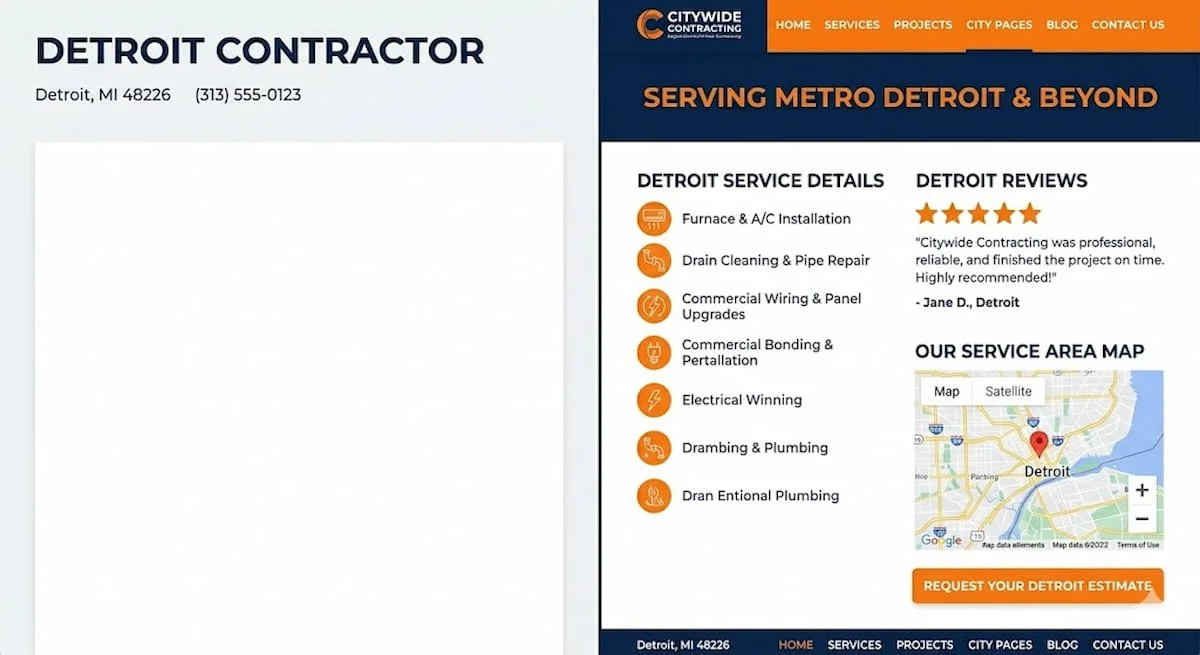
The version that ranks is not a copied template with a different city name dropped in. It has enough specific, local content to stand on its own. Here is what every location page needs:
City-specific H1—your service and the city name, written naturally
Localized intro—reference the area, nearby neighborhoods, or something real about that city
Service details—what you actually do there, not a recycled generic service list
Local proof—a review from that city, a job you completed there, or a direct mention of your work in that area
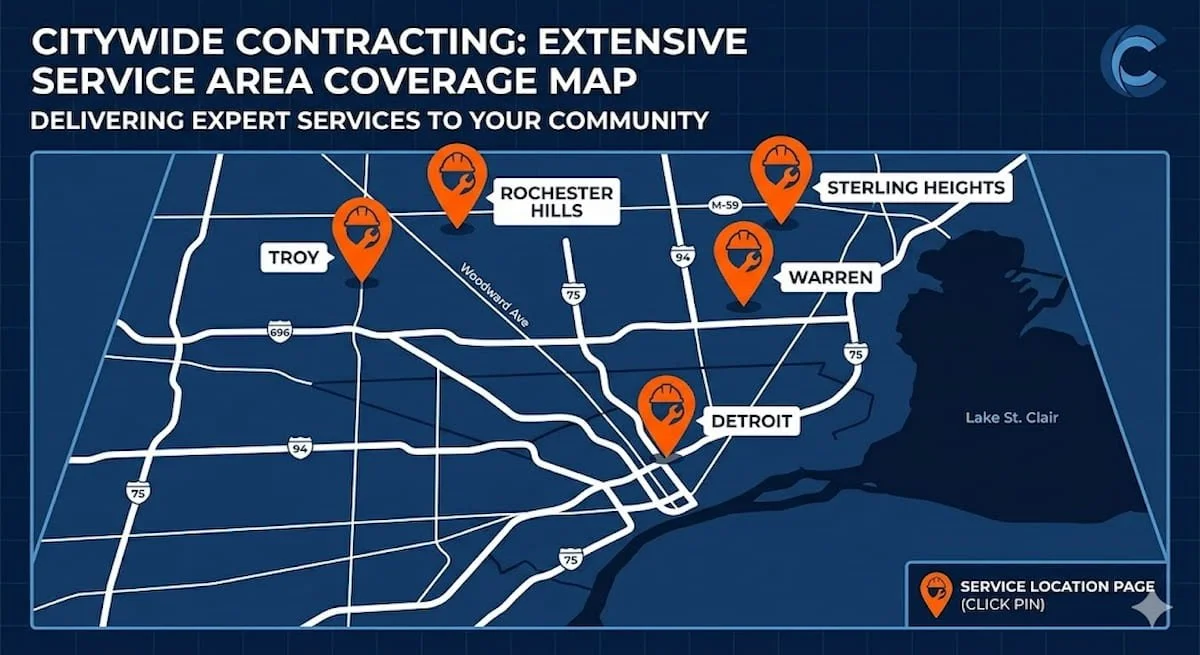
Service area or map reference—confirms your geographic coverage for Google
One clear CTA—a phone number or contact form on that page
Local Business schema—structured data with the correct city, service, and contact details
What kills these pages before they rank:
Word-for-word duplicate content across multiple cities
Pages under 400 words with no real substance
No internal links connecting city pages to your main service pages
To see how location pages fit into your full local SEO strategy, read: Local SEO for Contractors: How to Rank Higher and Win More Local Leads
How Many Location Pages Do You Need?
Start with three to five cities the ones where you actively work or want more jobs. Build those correctly before expanding. Three strong, specific pages will consistently outrank ten thin ones. Once those pages are indexed and pulling traffic, add more cities based on where your next growth target is.
How to prioritize which cities come first:
Cities where you've already completed jobs you can add real proof
Cities where you're actively trying to grow your book of work
Cities where competitor location pages are thin or nonexistent
Get a Free Local SEO Consultation
Not sure which cities to target first or how to structure your location pages? Dawla Marketing works with contractors to build local SEO systems that generate real inbound leads city by city, without the guesswork.
FAQs
-
Yes. A single service area page that lists multiple cities does not rank in local search. Each city needs its own dedicated page with unique content and real local signals to compete in that city's results.
-
Every location page needs a city-specific headline, a localized service description, any reviews or jobs from that area, a service area or map reference, a clear call to action, and LocalBusiness schema markup with accurate city and contact data.
-
A minimum of 400 words of real, useful content. Padding a page to hit a word count does not work. Pages that copy the same content across multiple cities get filtered out by Google rather than ranked.